
Anies claims Jaklingko makes Jakarta residents more prosperous
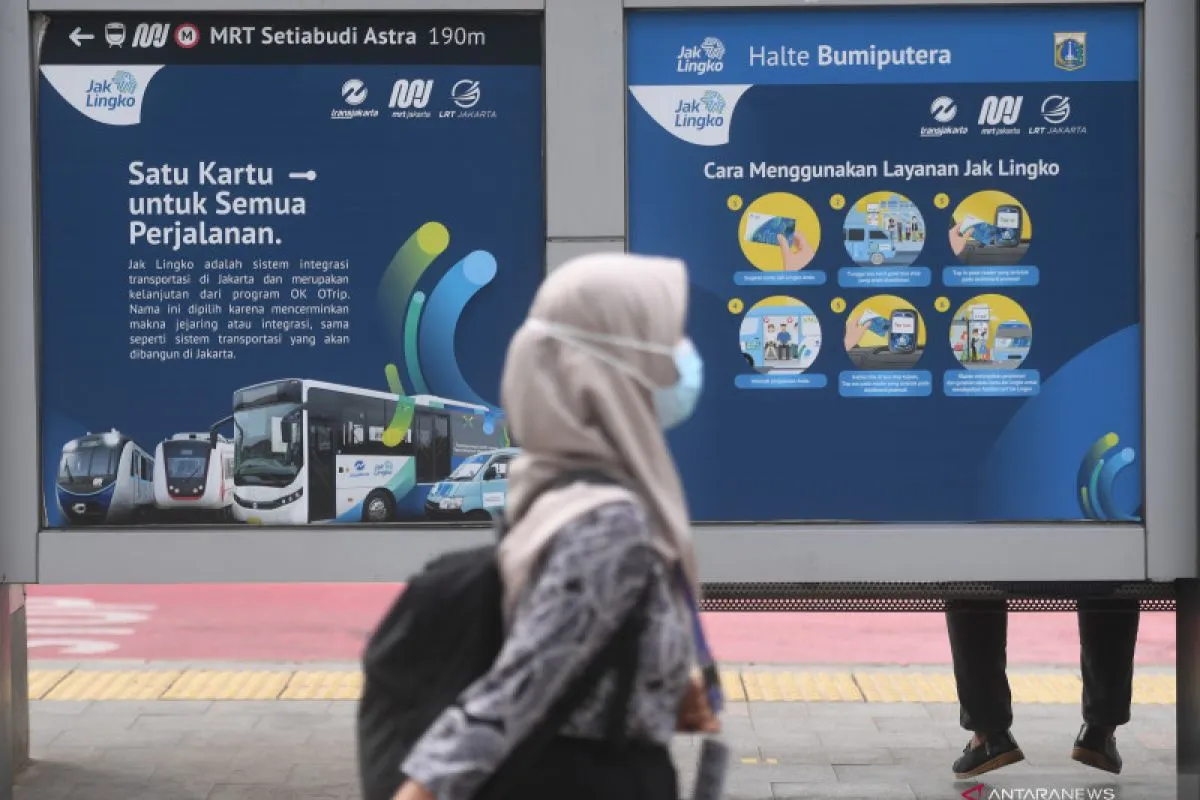
Jakarta (ANTARA) – Governor of DKI Jakarta Anies Baswedan claims the Jaklingko program formed since 2018 makes Jakarta residents more prosperous. This is because, said Anies in Jakarta, Thursday, with a fare of Rp5,000 per three hours via the Jaklingko card, passengers can ride public transport like TransJakarta and urban transport (angkot) repeatedly without additional costs.
“In Jakarta, it can almost be said that family expenses can reach up to 30 percent for transportation. So, receiving monthly money, 30 percent of it can be used up for transportation,” said Anies. Besides being more economical, continued Anies, the existence of Jaklingko also encourages the community to switch to using public transport, especially TransJakarta buses. At the end of 2016, the number of TransJakarta passengers reached 340,000 people per day, then in 2020 it rose 3.5 times to become more than one million passengers.
“If we add to the fleet it means we have money, but if passengers increase it means there is a change in the behavior of Jakarta residents. From using private vehicles changing to using public vehicles,” said Anies. With that change, he continued, then the cost of living for residents decreases because their expenditure for transportation is much lower. In other words, emphasized Anies, the hope is they can be more prosperous because their budget can be used for other needs.
This Jaklingko system, said Anies, not only benefits the community, but also the drivers and vehicle owners whose income is more certain because DKI has paid them based on kilometer units. While drivers do not need to chase deposit targets, vehicle owners will feel calm because their cars are better maintained through well-predicted income. “For angkot for example, in cooperation with Jaklingko, their income is no longer calculated based on the number of passengers, but calculated based on kilometers per day, so the angkot does not wait around. Because he is targeted one day a certain number of kilometers, for example a minimum of 90 km maximum 110 kilometers, it cannot be more and less. So, whether there are passengers or no passengers, he will keep circulating,” he said.
Anies also explained the naming of Jaklingko, where he mentioned Jak means Jakarta, while the word Lingko is taken from the regional language of Manggarai, East Nusa Tenggara (NTT), which means a paddy field irrigation distribution system shaped like a spider web, which has been proposed to be adopted into Indonesian. “We proposed that language to be adopted into the Indonesian language. Alhamdulillah, now it has been recognized as Indonesian, becoming Jaklingko. With this Jaklingko, all angkot operators, including medium buses, all operate in one system,” said Anies.
Reporter: Ricky Prayoga Editor: Edy Sujatmiko
COPYRIGHT © ANTARA 2021